DashThis has long been a go-to for agencies wanting quick, no-code dashboards, but its simplicity can be a double-edged sword once client rosters grow. This comparison looks at where DashThis holds up, where agencies start looking elsewhere, and how DataMyth handles the same reporting challenge.
DashThis’s Core Strength
DashThis is built around fast dashboard creation with minimal setup, letting agencies connect a data source and get a report live in minutes. It’s a popular pick for smaller teams that want simplicity over deep customization.
Common Friction Points
- Dashboards are largely template-based, offering limited room for deep customization of layout or branding depth.
- Like most dashboard-first tools, written interpretation of “why” a metric moved is left to the user.
- As agencies add more clients and data sources, per-report costs can climb.
How DataMyth Approaches It Differently
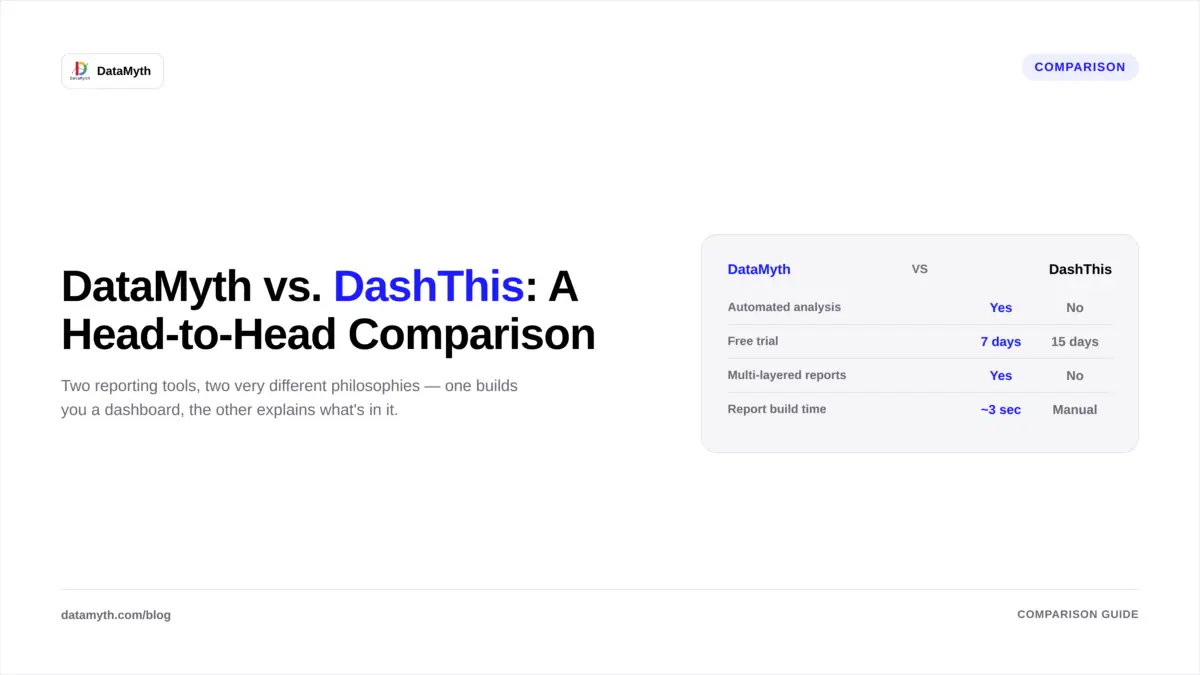
Instead of just consolidating metrics into a dashboard, DataMyth automatically writes the analysis behind performance shifts, reducing the manual commentary that account managers add on top of a DashThis-style report. This becomes especially useful for agencies managing many accounts weekly, where writing individual insights per client eats significant time.
Choosing Between the Two
- DashThis suits teams prioritizing speed and simplicity in dashboard setup.
- DataMyth suits teams that want the report to explain itself without added manual write-ups.
- Run a trial period with both before migrating existing client reports.
Conclusion
Both tools automate the mechanical side of reporting, but the real differentiator is whether your team still needs to write the story behind the data. If that’s your biggest time cost, DataMyth’s automated insight layer closes that gap directly.
Is DashThis good for small agencies?
Yes, it’s designed for fast setup and works well for small teams needing straightforward dashboards without heavy customization.
Does DataMyth offer a free trial like DashThis?
Yes, DataMyth offers a 7-day free trial with no credit card required, letting you test automated insights before committing.
Which tool saves more time on reporting?
DashThis saves time on dashboard building; DataMyth saves additional time by automating the written performance analysis on top of the data.
Can both tools connect to Google Ads and Meta Ads?
Yes, both platforms support integrations with major ad and analytics platforms including Google Ads and Meta Ads.